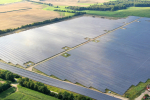
Richard is committed to protecting farmland from opportunistic, short-term approaches to meeting clean energy goals and to preserving the countryside from a proliferation of ten-foot solar panels. As a CPRE Rooftop Solar Champion, he advocates for rooftop solar as a practical and less harmful solution. Learn more about Richard's role here.
Richard has continued to press both the previous and the current Government on national policy regarding the use of agricultural land for solar farms. Before the last election, Richard asked parliamentary questions about the Government's commitment to implement national guidance to avoid Best and Most Versatile land in solar developments, the use of agricultural land for solar developments, and the clustering of solar developments for connection to the grid. Richard also participated in a Westminster Hall debate about the use of large scale solar developments.
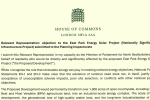
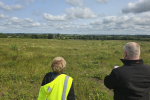
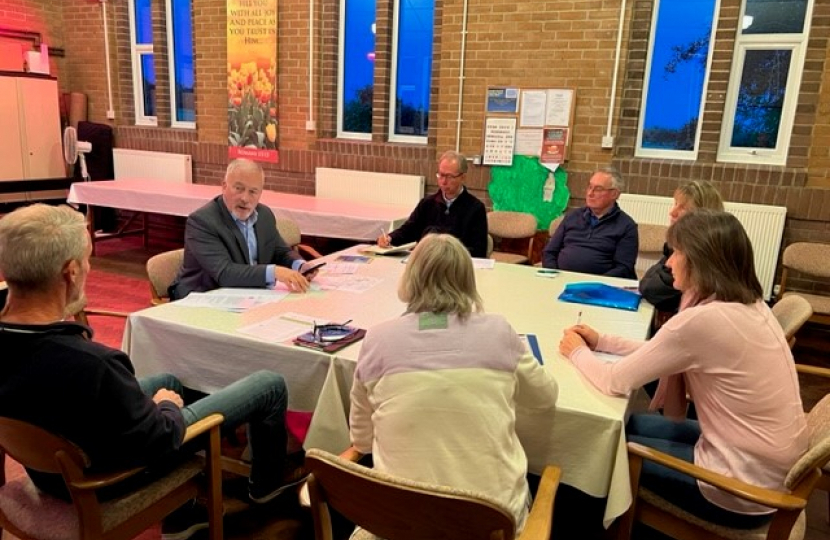
Within days of the General Election, the new Labour Government approved three large-scale solar farm projects across the country - in Lincolnshire, Rutland and Lincolnshire, and Cambridgeshire and Suffolk. In light of this, Richard met again with the developers of East Park Energy, a proposed 1900-acre solar plant in the north of Richard's constituency, as well as affected Parish Councils to discuss the implications of this and how residents’ voices could be amplified in the planning process. You can read more about East Park Energy and Richard's work to oppose it here.
During the 2024 summer holidays, the Government held a public consultation on their proposed reforms to the National Planning Policy Framework and other changes to the planning system which would affect planning decisions for large-scale solar developments. Richard encouraged residents to have their say.
In February last year, Richard took part in a Westminster Hall debate on the siting of solar farms on agricultural land, using the opportunity to highlight the issues raised by East Park Energy and asked the Minister for confirmation that government guidance remains that use of BMV should be avoided. As the Minister did not give a direct response to this question, Richard followed up with a letter to the Secretary of State for Energy, who confirmed in writing that this was the case.
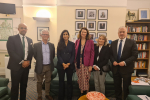
At the beginning of last summer, Richard met with CPRE, the Countryside Charity, in Parliament to discuss local issues including the development of large scale ground-mounted solar farms. That same month, Richard also submitted written evidence to the Energy Security and Net Zero Committee’s inquiry into the Government’s draft National Policy Statements for energy infrastructure, which examined how energy policy can balance national objectives with environmental protection, high‑quality farmland and community impacts.
Following Richard's correspondence with the Energy Secretary confirming that government guidance stated that BMV land should be avoided for solar development, he joined 30 other Parliamentarians from across party lines to call on the Government to protect Best and Most Versatile (BMV) Agricultural land when approving the roll out of new ground solar installations.
See below for all of Richard's news on Solar Power and Solar Farms.