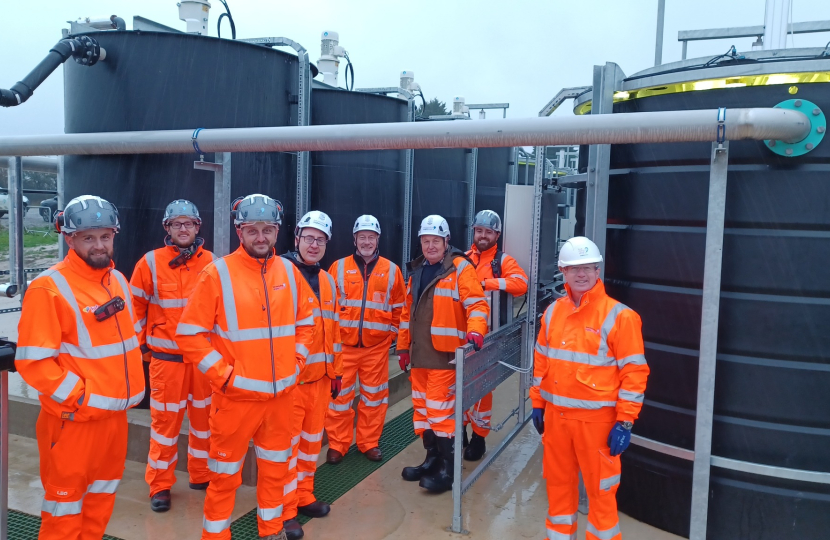
Richard recently visited the Thurleigh Water Recycling centre, to see Anglian Water’s latest water treatment process.
The natural process uses algae to remove phosphorous and other substances from wastewater which helps to reduce pollution in local rivers. The method involves temporarily starving the algae before placing them in specially designed tanks with light and air, where they naturally absorb unwanted materials from the water. Once the cleaning process is complete, the algae are separated and reused, creating a continuous cycle.
This approach replaces traditional chemical treatments, lowers carbon emissions by an estimated 46 tonnes of CO₂ equivalent each year, reduces the need for chemical deliveries and tanker movements, and produces significantly less sludge. The remaining material can then be repurposed as fertiliser or used in specialist products.
The Thurleigh installation is the first of its kind within the Anglian Water region, with additional schemes planned, including a similar project proposed for Bolnhurst.
Richard Fuller MP said:
It is encouraging to see Anglian Water investing in innovative, nature‑based solutions that can improve water quality while reducing environmental impact. This new algae‑based system at Thurleigh is an important step forward and I welcome their plans to expand this approach to other sites across the area.
Following instances of sewage backup and water flooding in North Bedfordshire in 2023, Richard
Drawing on a successful model used in Norfolk, Richard called for the creation of a strategic water management group in May 2024 to bring greater coordination to flood risk planning, water quality issues and residents’ concerns.
Richard worked with the Mayor of Bedford Borough to establish the North Bedfordshire Water Management Group, ensuring the initiative sits with the local authority, which holds the statutory powers needed to act. This new partnership brings together Anglian Water, local Drainage Boards, the Environment Agency, Parish Councils and environmental groups to create a shared action plan and strengthen accountability across all agencies.
To provide expert leadership, Professor Paul Leinster CBE agreed to chair the group, to help shape a long‑term, evidence‑based strategy for managing water resources and reducing flood risk.
The Bedford Borough Water Partnership last met at the end of November and you can find out more about this meeting here.
You can read more about Richard’s work on water management on his website here: https://www.richardfuller.co.uk/campaigns/wastewater-overflows-and-flooding-0