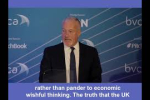
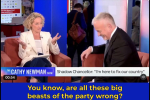
Just before the House of Commons rose for summer recess, Richard took part in a Westminster Hall debate on improving financial inclusion for young people.
Richard Fuller, who responded to the debate as the Shadow Chief Secretary to the Treasury said:
I stressed the importance of financial education, helping young people understand budgeting, savings, debt, pensions and the power of compound interest. I also highlighted concerns about the decline in employment opportunities for young people, as early work experience can play a vital role in building financial confidence and independence. The best way to help young people with their finances is to get them into stable, secure, and good paying jobs. The Government’s tax hikes, Employment Rights Act, and inflation busting minimum wage rises have seen youth unemployment rise to its highest level in over a decade.
I explored issues such as apprenticeships, student finance, the risks of getting financial advice from social media, and the opportunities offered by new financial technologies. I also called for greater support for microfinance and better access to banking services for young people, while stressing the need to ensure schools deliver high-quality financial education at both primary and secondary level. The Opposition made financial education compulsory in the curriculum for 11-16 year olds in 2014 although many schools did not follow through.
Giving young people the knowledge, skills and opportunities to manage their finances is essential to helping them build secure and successful futures.
In 2014, the previous Government made financial education compulsory as part of the Citizenship curriculum for 11-16 year olds. However, a 2023 report by the APPG on Financial Education for Young People found that half of teachers didn’t realise it was part of the curriculum at all. The previous Government tried to mitigate the issue of funding by investing £1 million to embed and scale financial education training.
The last Government also made progress in improving student attainment in mathematics. In the PISA - Programme for International Student Assessment - ratings for mathematics in 2009, England (as education is a devolved matter) was ranked 27th; by 2023, it was ranked 11th. That is good progress and is part of ensuring that young people understand numbers and can therefore get to grips with financial matters.
The Opposition has also set out a New Deal for Young People which includes capping real interest on Plan 2 Student Loans, supporting 100,000 more apprenticeships, allowing young people to keep the first £5,000 of NICs that they earn in their first job, and ending low value degrees.
You can see the full debate on financial inclusion, including the response from the Minister at https://youtu.be/qbPqKxG5PLU
Richard's contribution can be watched at https://youtu.be/nBG_erF90Bg