This week, Richard, as Shadow Chief Secretary to the Treasury, commented on the appointment of John Healey as the new Chancellor of the Exchequer and Andy Burnham's first announcement as PM on cutting VAT on electricity bills:
Mr Healey was liked at Defence Secretary but found himself unable to convince either the former Chancellor or the former Prime Minister to take the steps needed to fund an increase in defence expenditure.
Let us hope that now he has the key role of Chancellor himself that he will look for ways to reduce welfare expenses to pay for more defence. Kemi Badenoch has already committed the Conservatives to support this move.
One note of caution: yet again we have a senior economics role going to someone with no private sector experience.
Our businesses are cutting back under the burden of high taxes, unemployment is up up up. Let us hope Mr Healey secures some junior ministers with that experience.
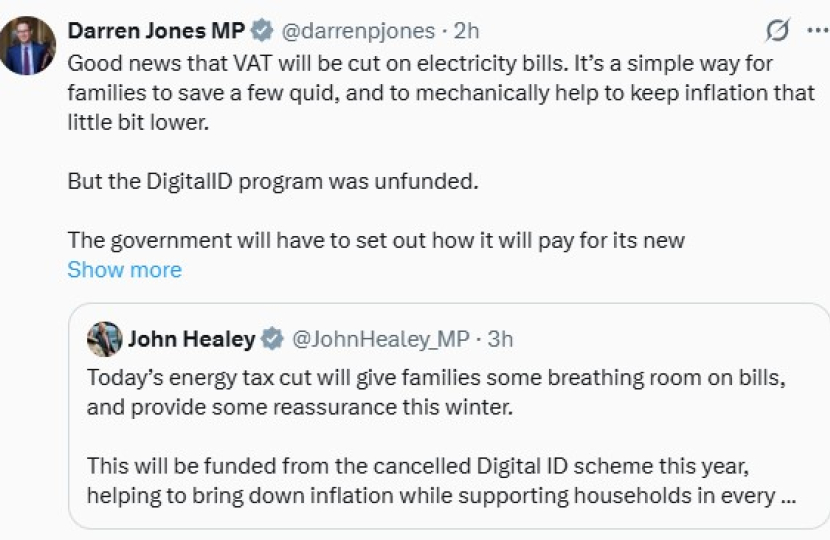
This morning, there has been sharp criticism by former Chief Secretary Darren Jones who points out that the government’s first announcement doesn’t add up. Cutting VAT on electricity bills. is welcome, but is entirely unfunded - as Darren Jones stated in this X.com message - meaning taxes or borrowing will have to go up.
Why did no one check the numbers?
To be fair to the new Chancellor, this looks to me like a No10 initiative that he has to front up. Mr Healey deserved a better start from No10.Here is my view on three things the new Chancellor should NOT do:
Number one: do not heed calls to equalise tax rates on wages with tax rates on capital gains. The latter involve greater risk, longer deferrals and are the basis of economic growth and more jobs.
Number two: do not add to the long term tax burden - the one that we leave for our children and grandchildren to pay - by getting government to do MORE- but instead look at creative ways to REDUCE the debts and obligations we are currently set to leave them
Number three: do not accept the pitiful rate of productivity improvement in much of the state sector. Public services already have a woeful record compared to the private sector; better to set demanding targets for short and medium term improvements and create incentives and accountabilities with bite to encourage better results.